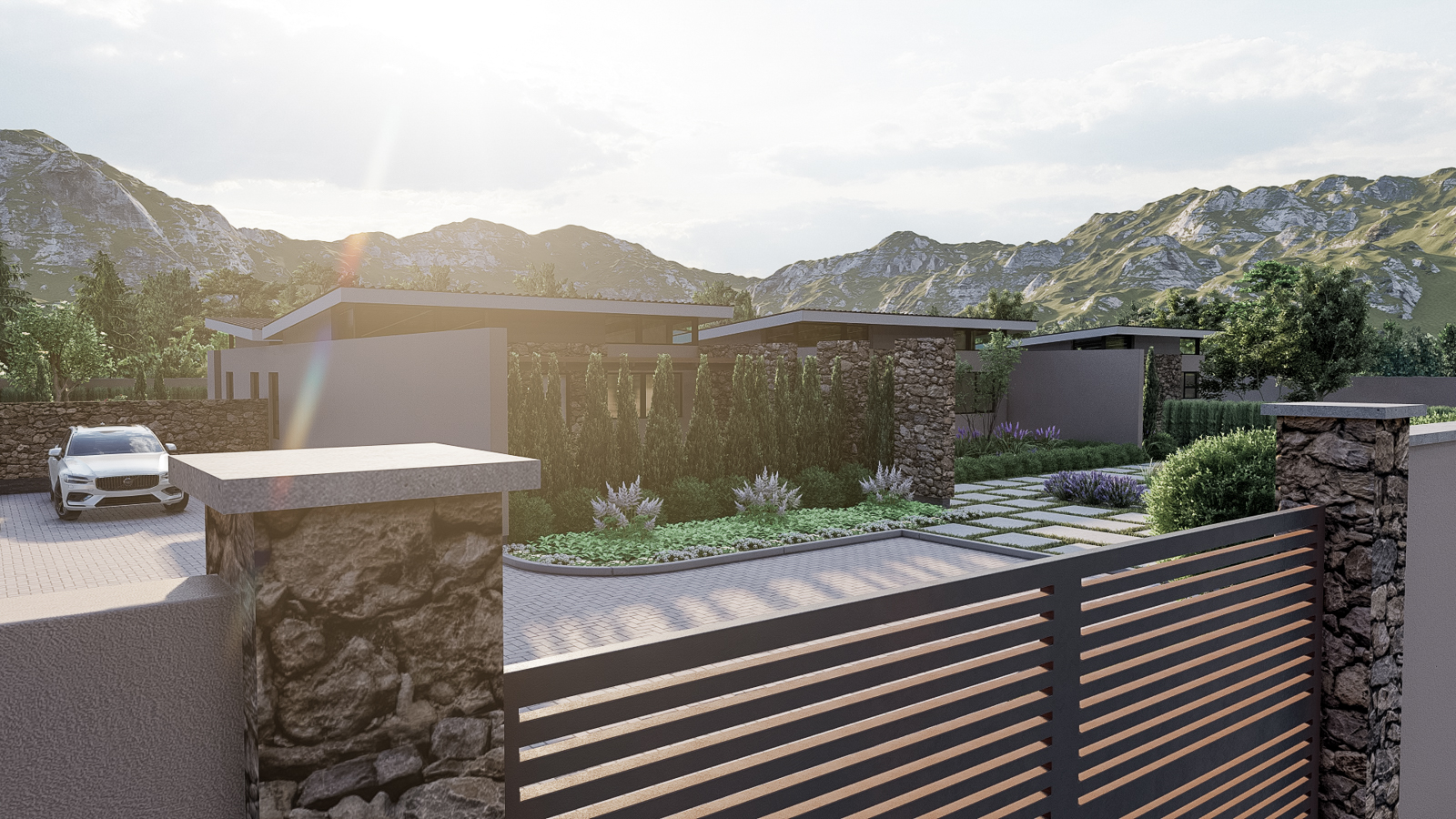
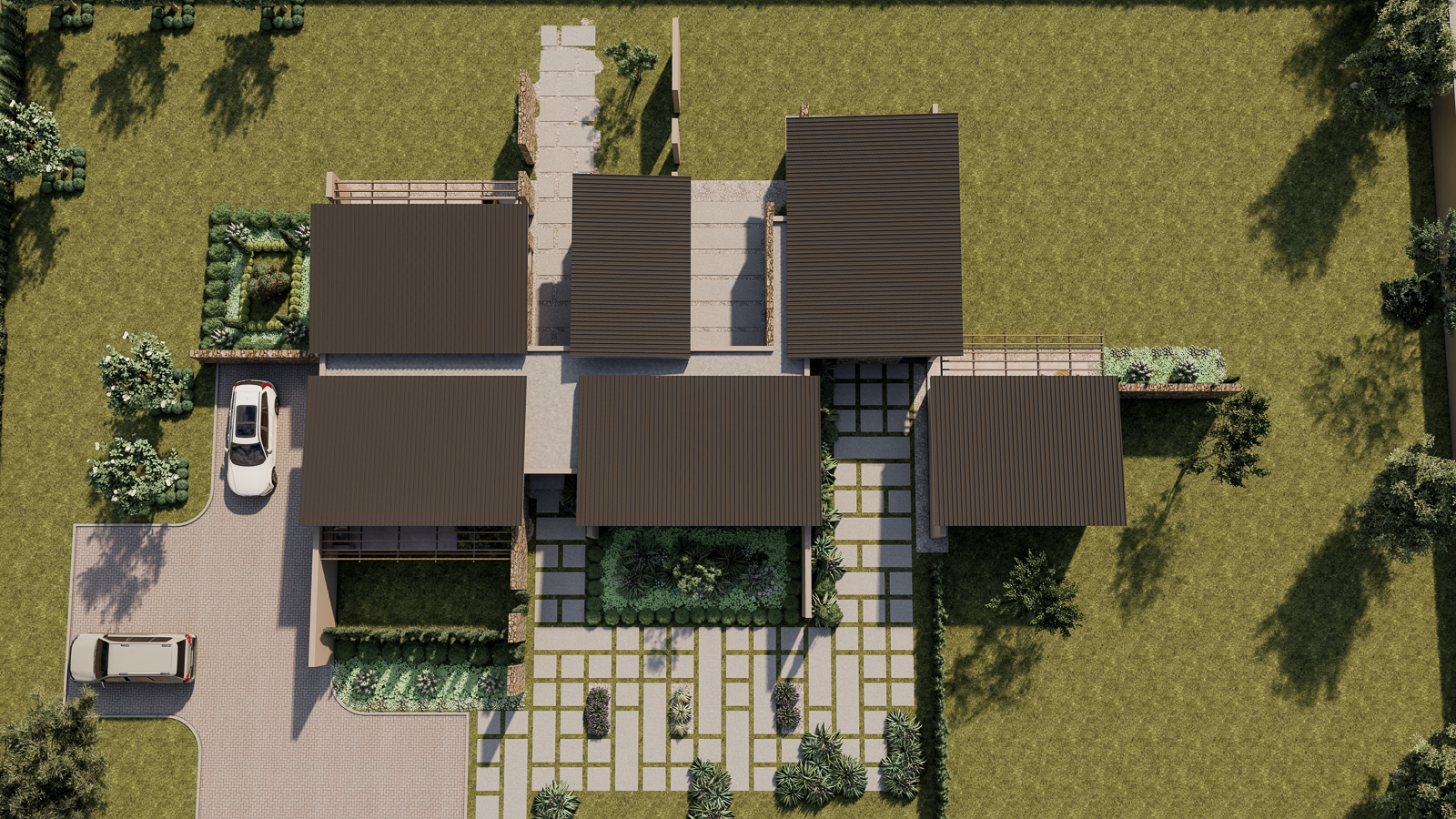
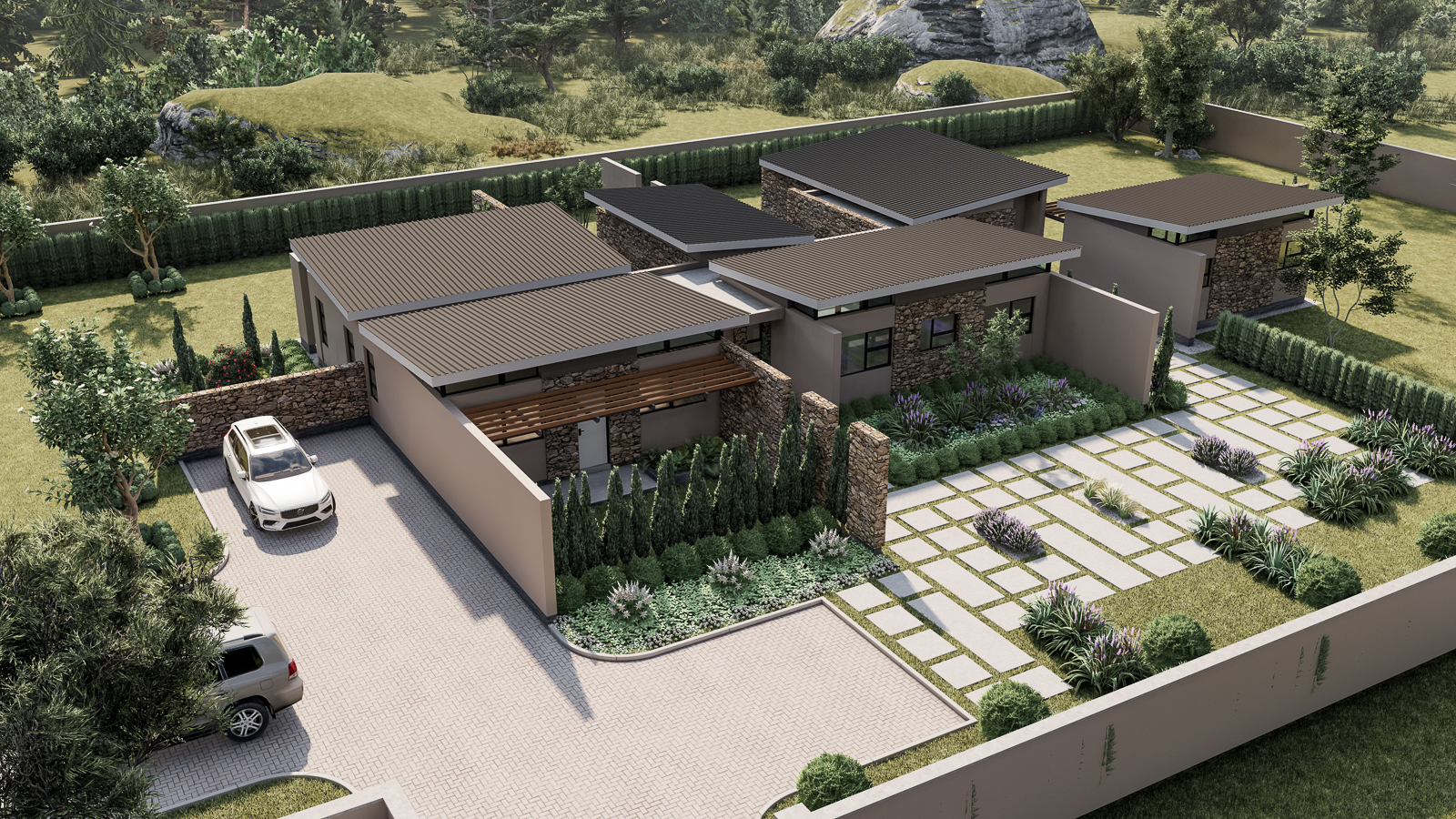
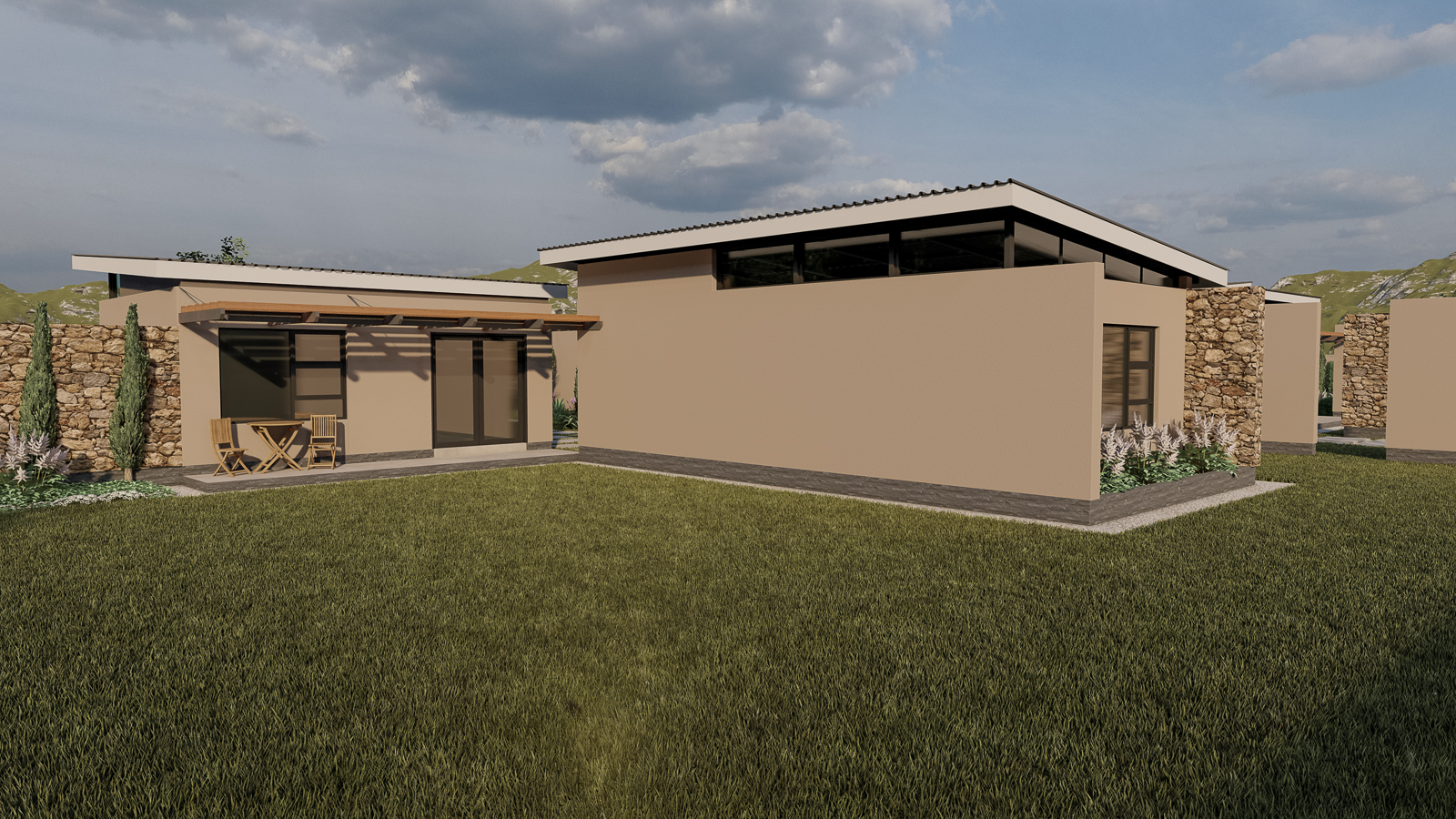
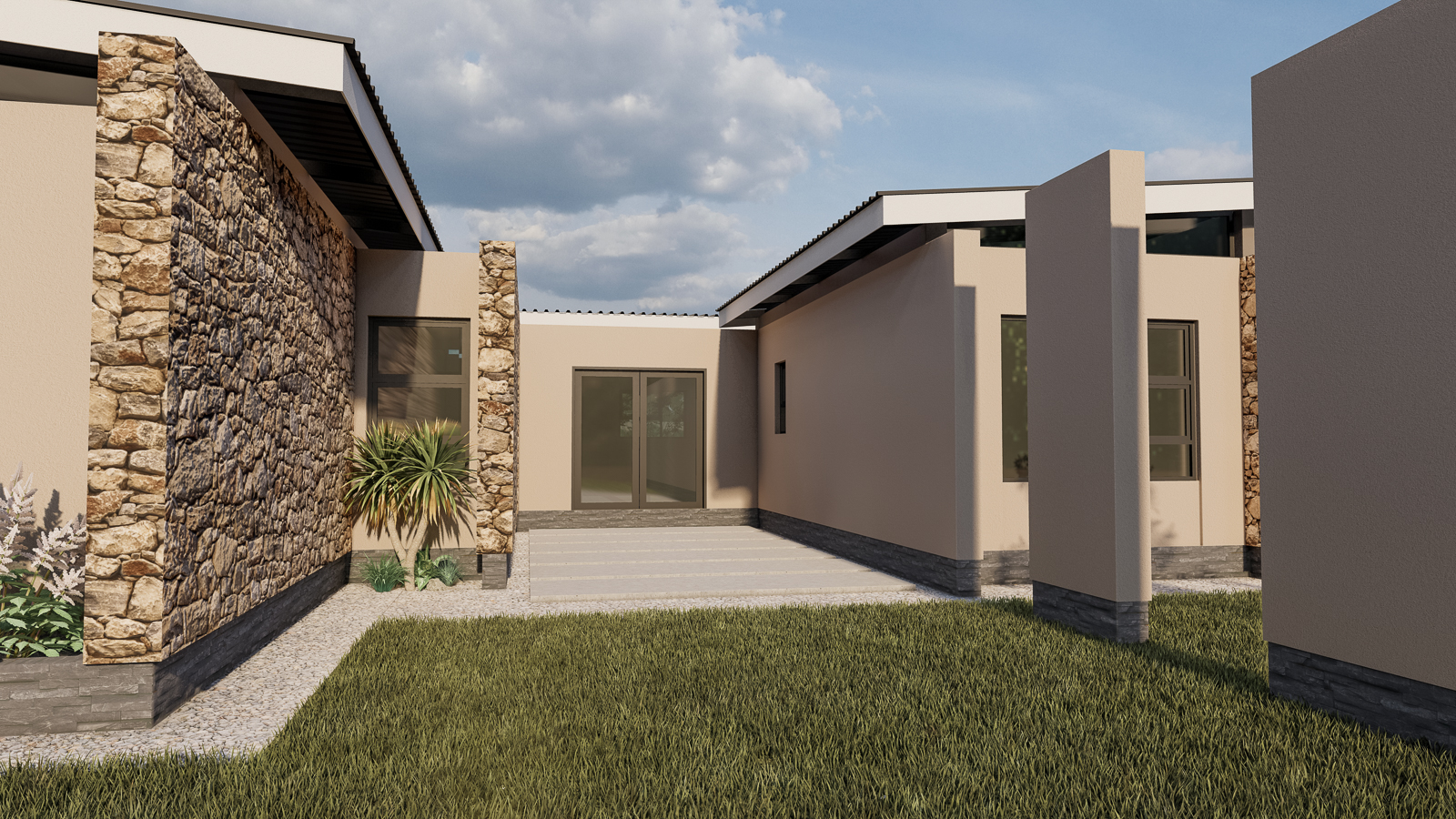
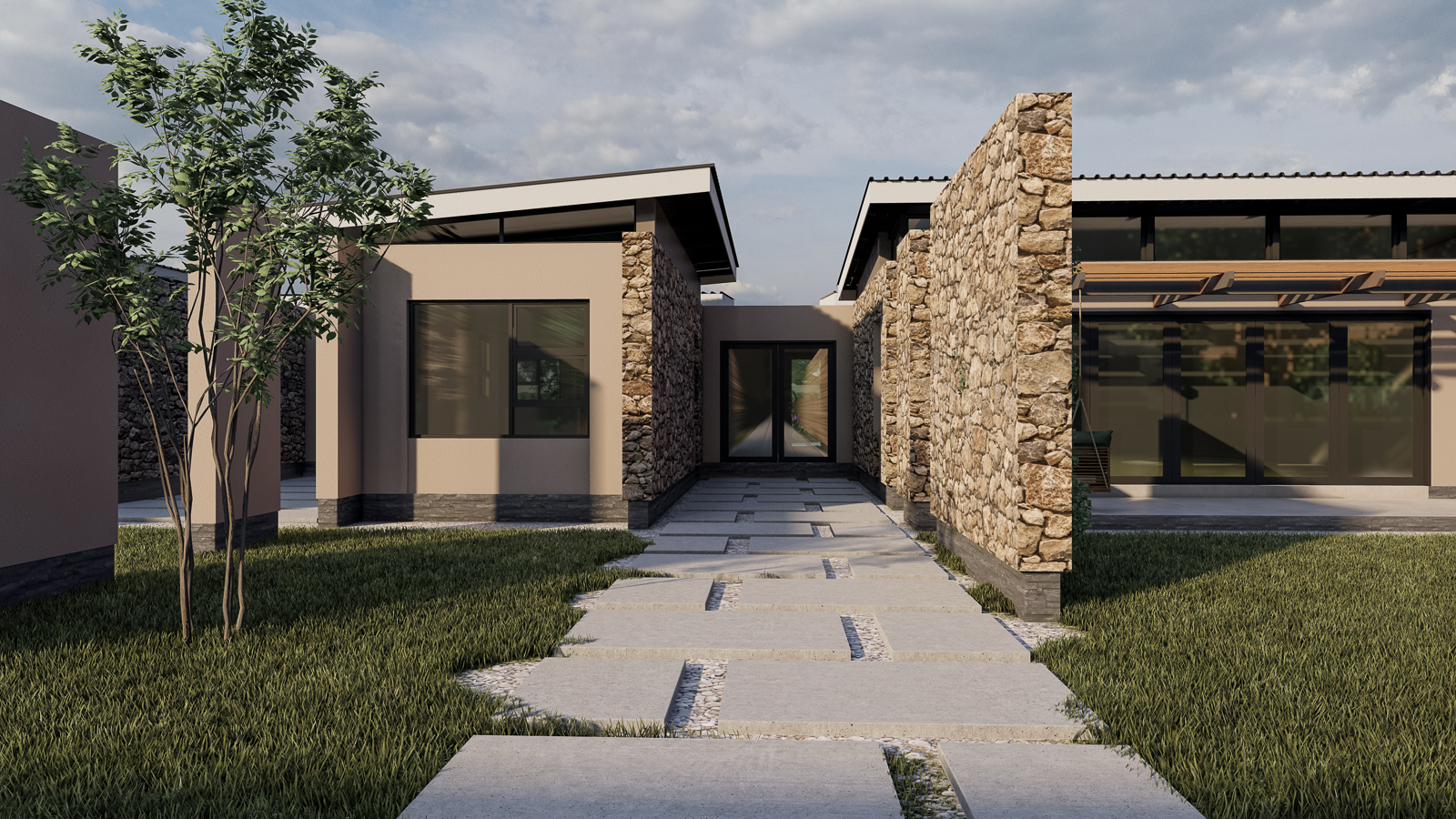
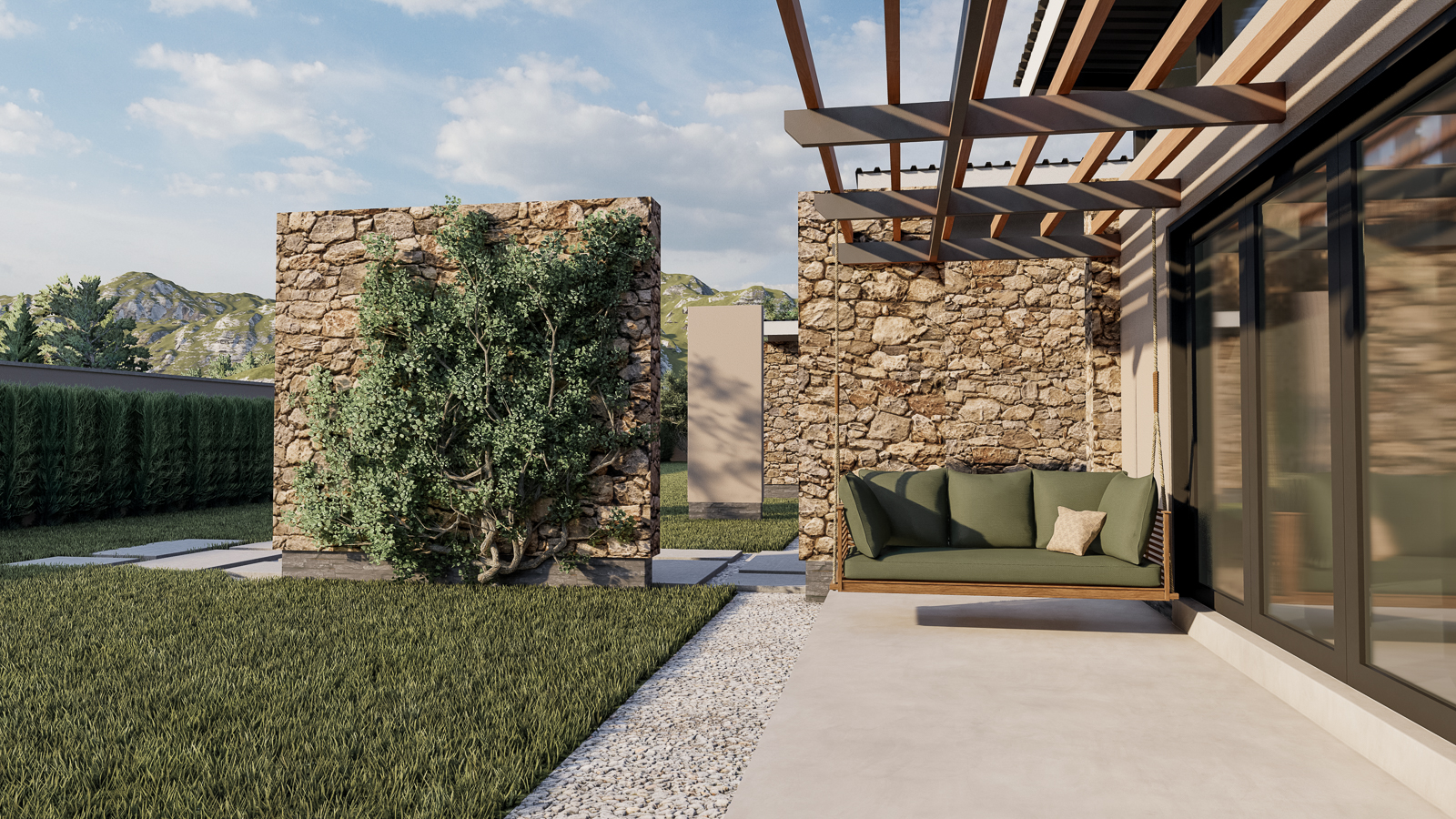
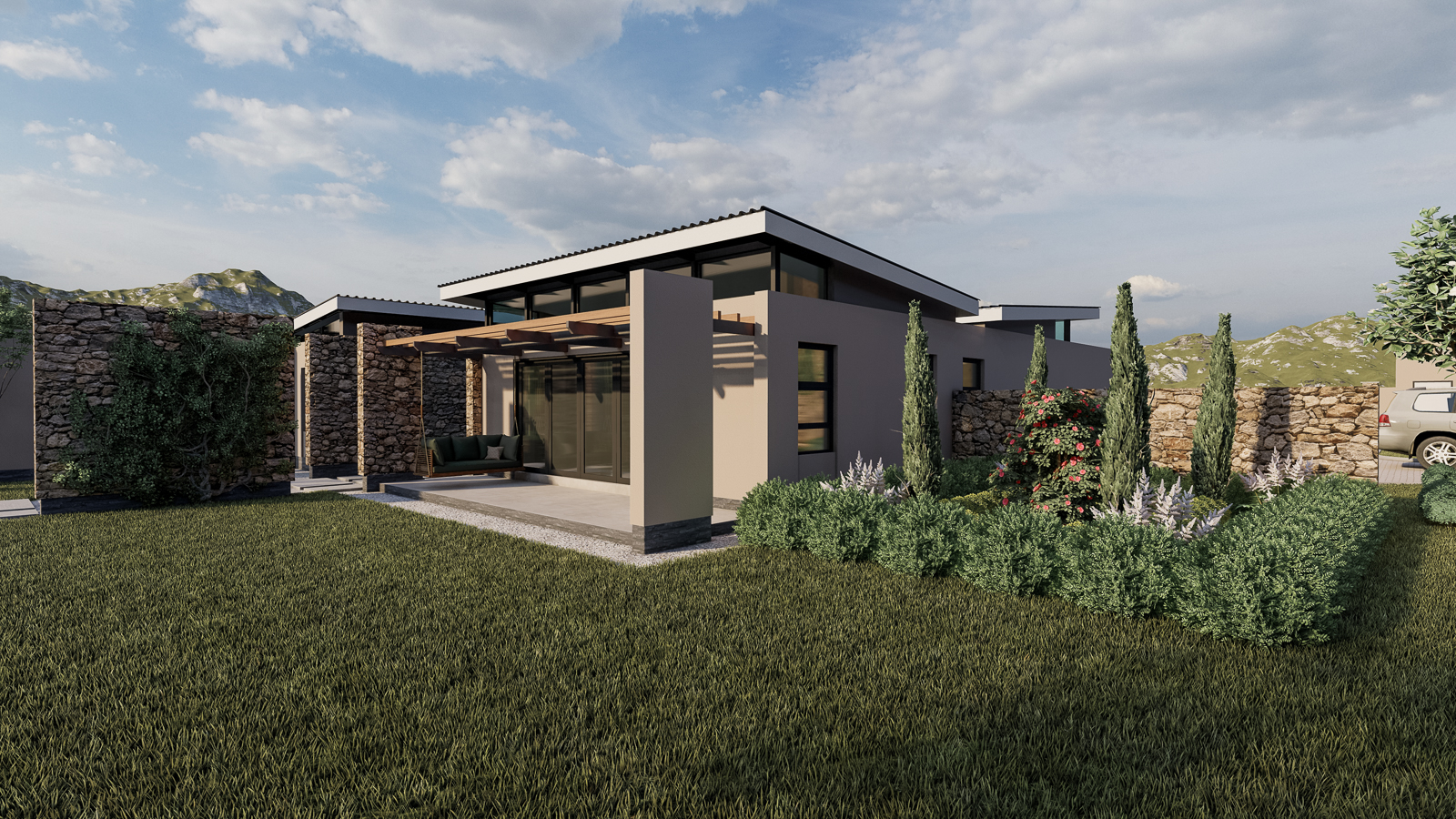
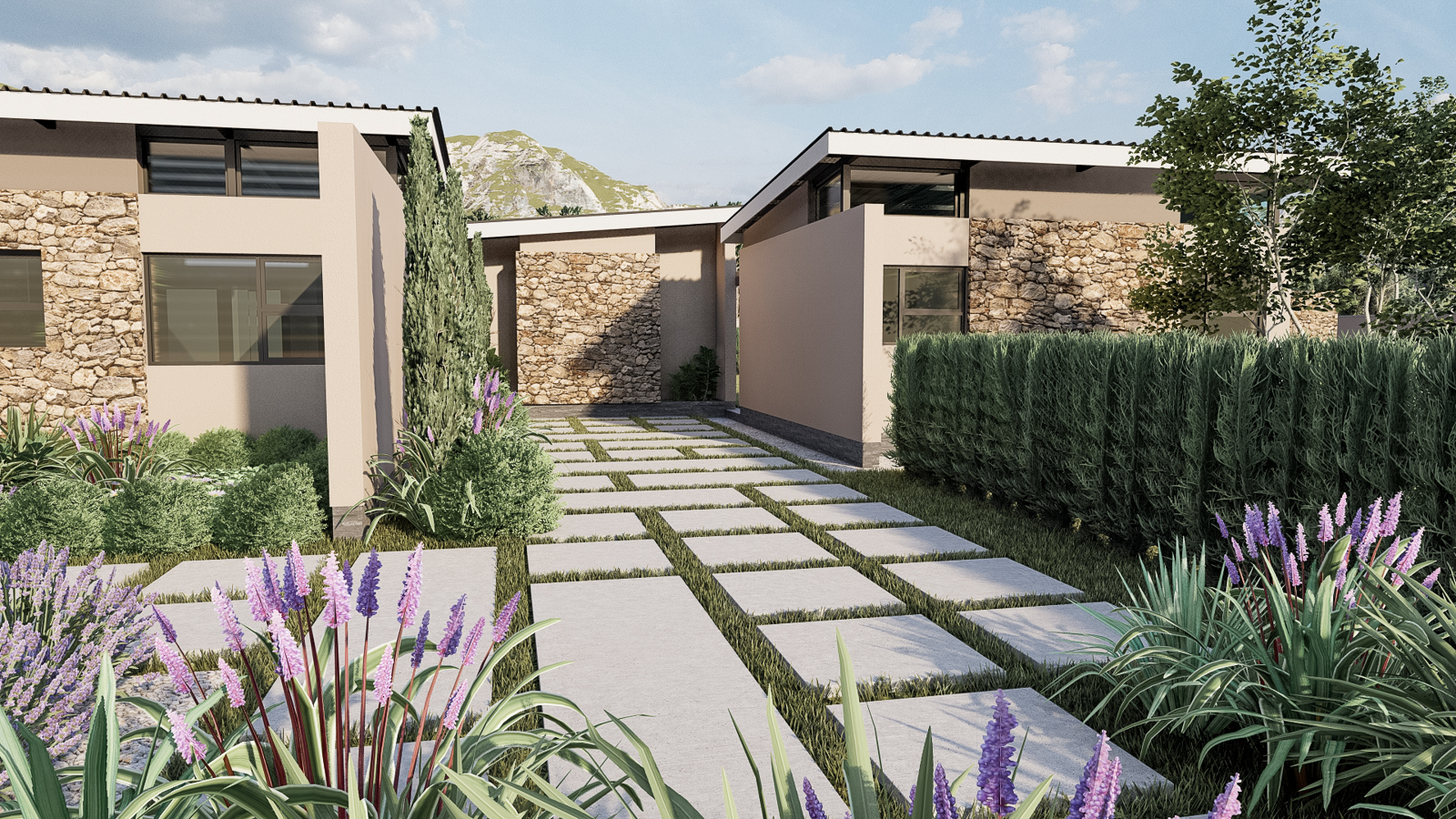
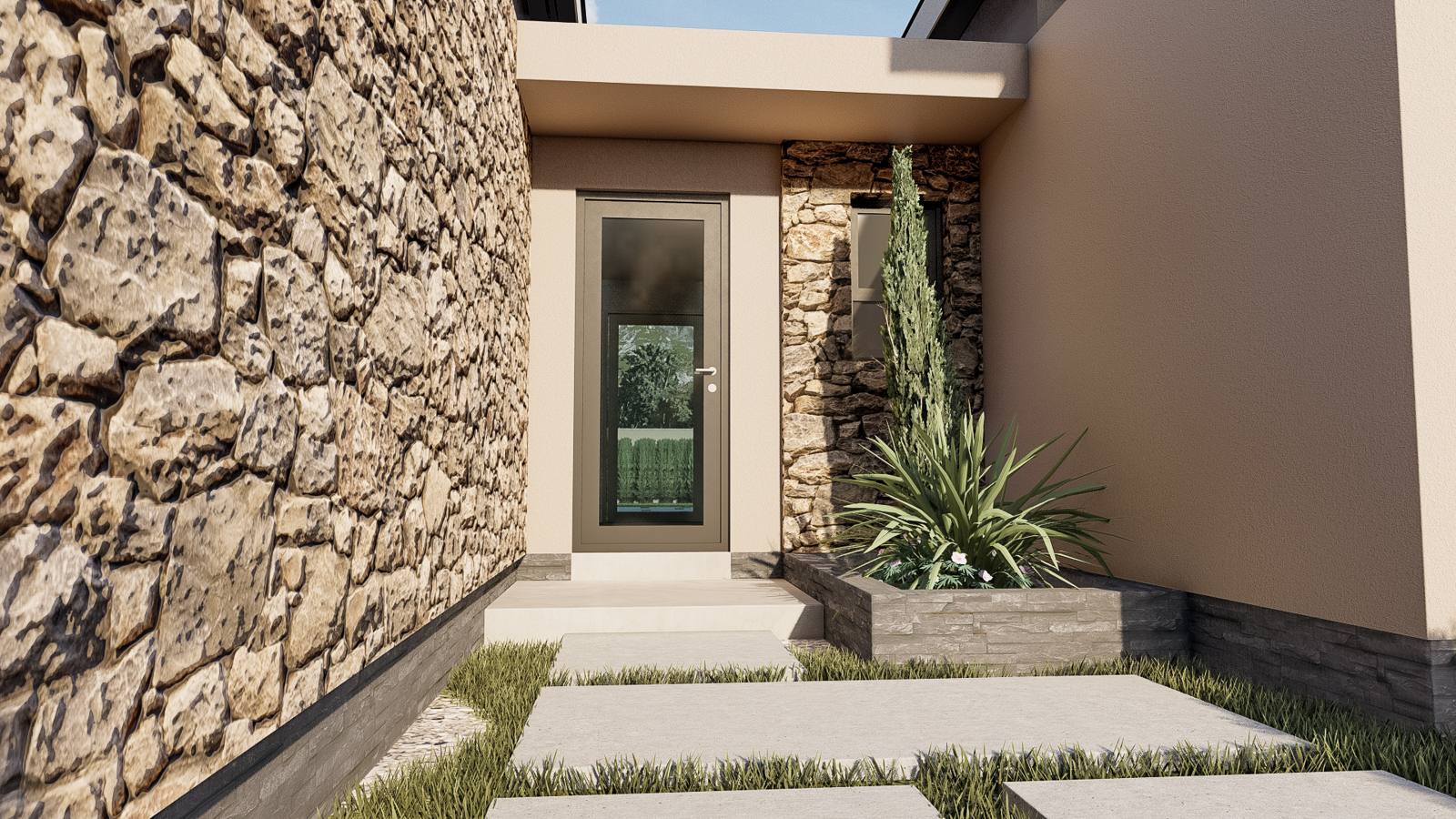
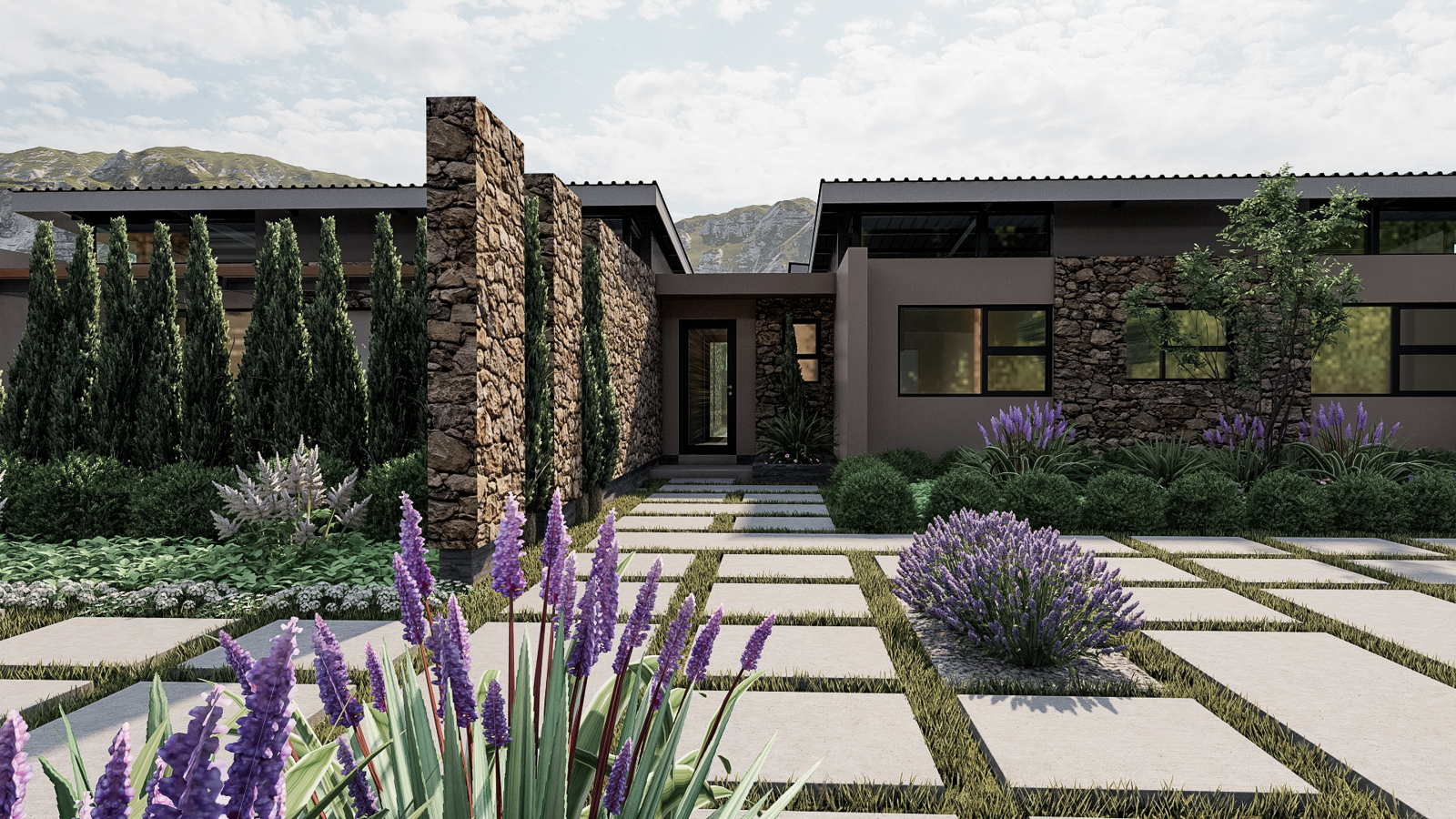
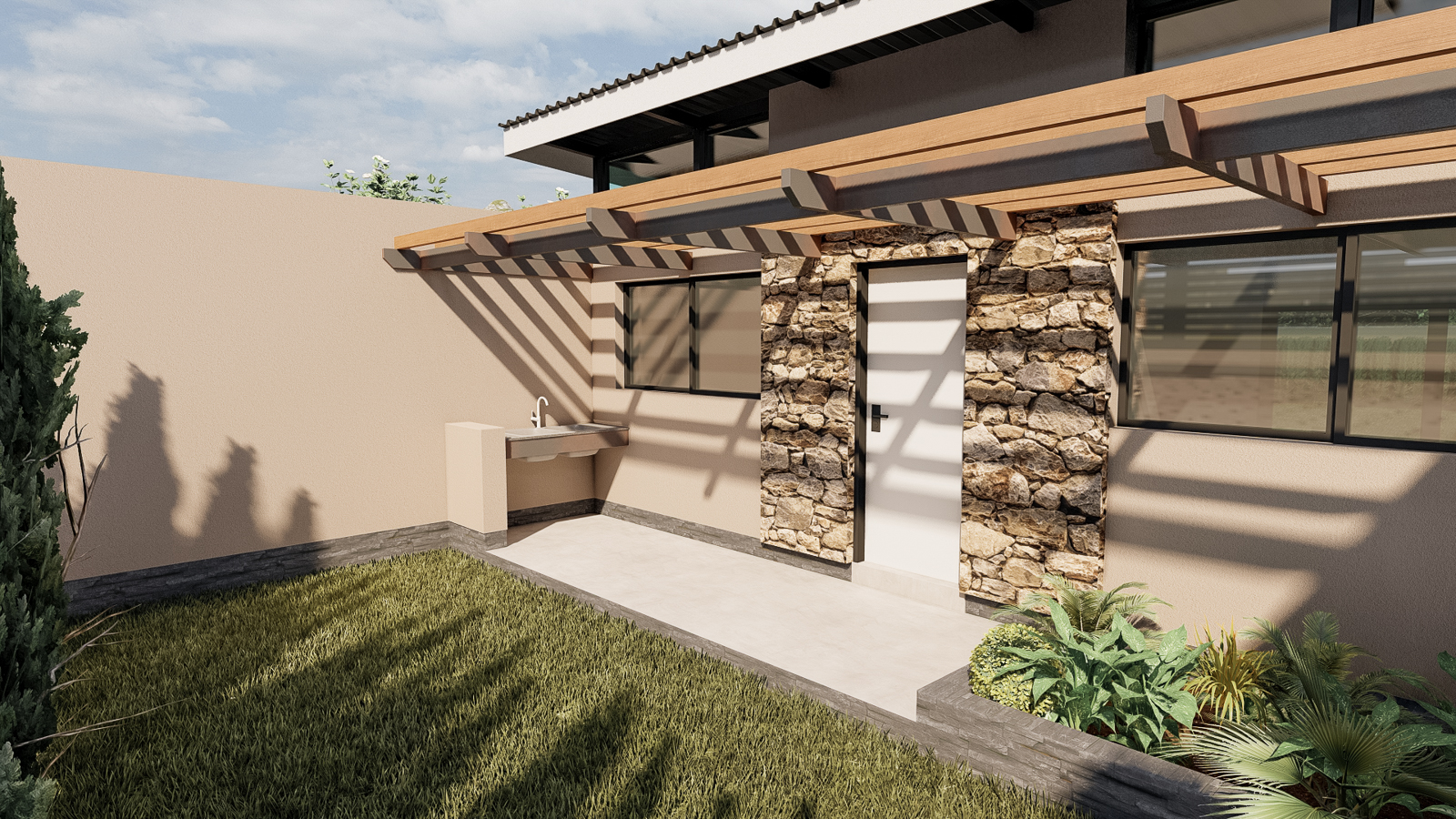
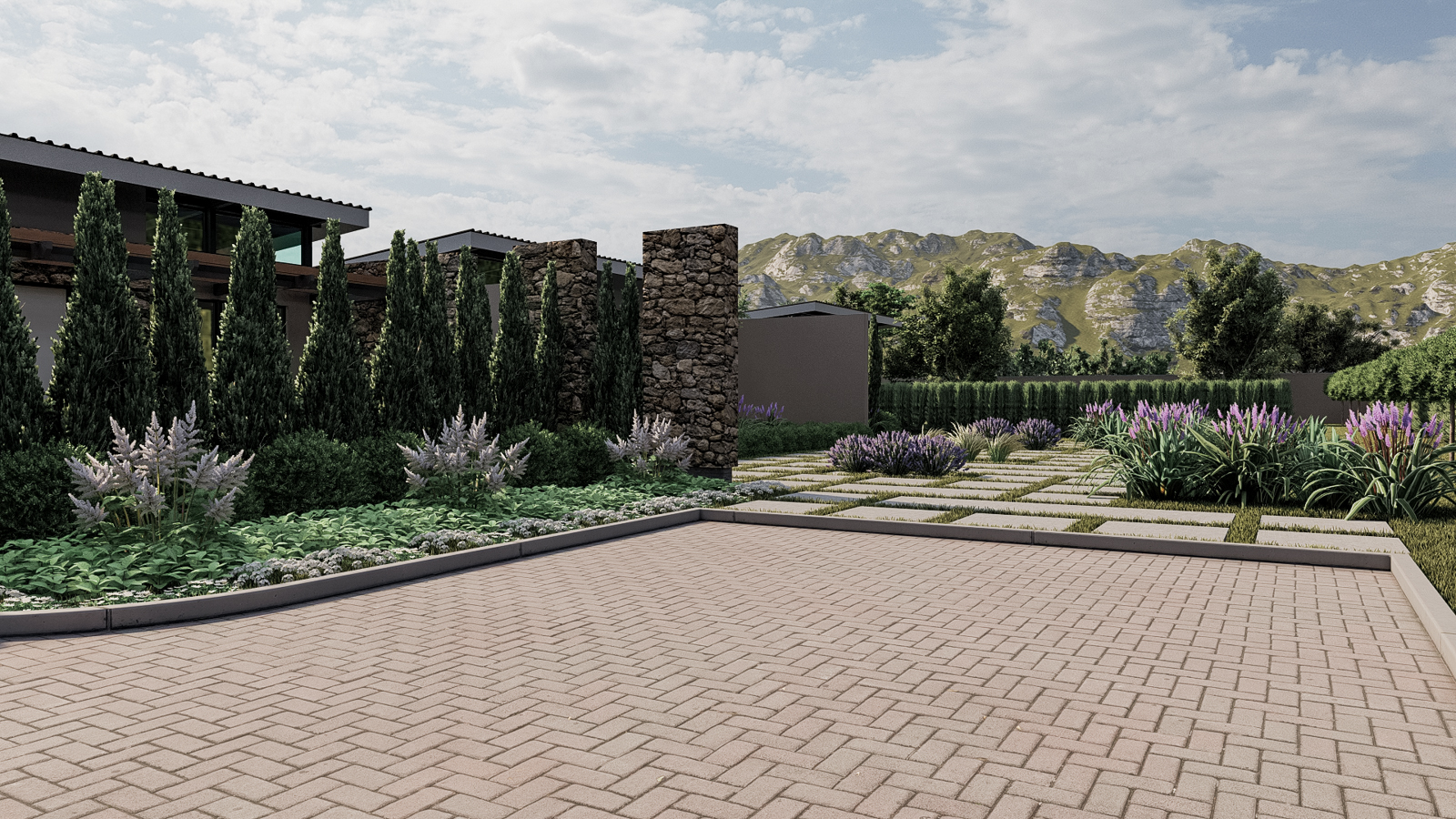
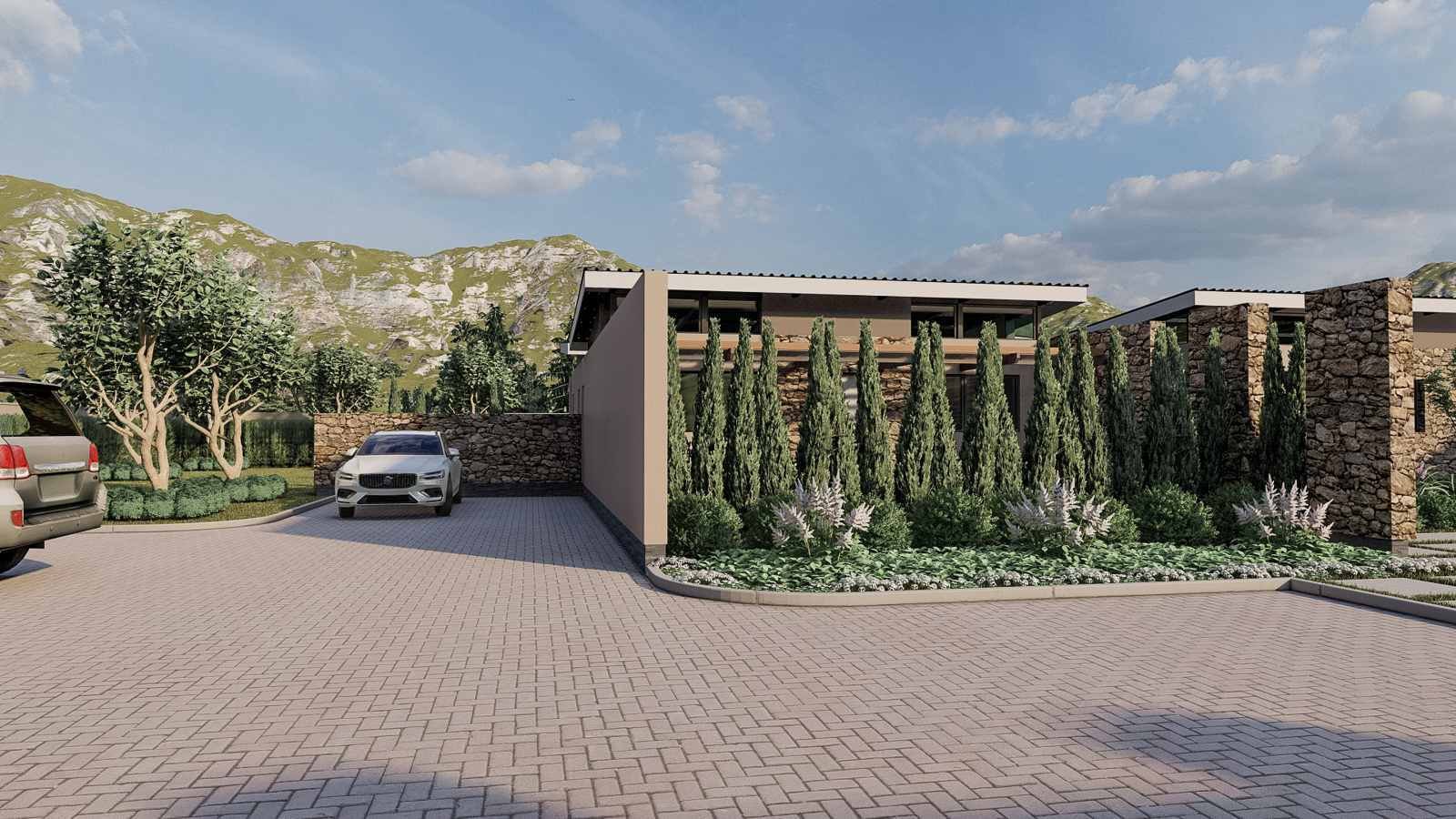
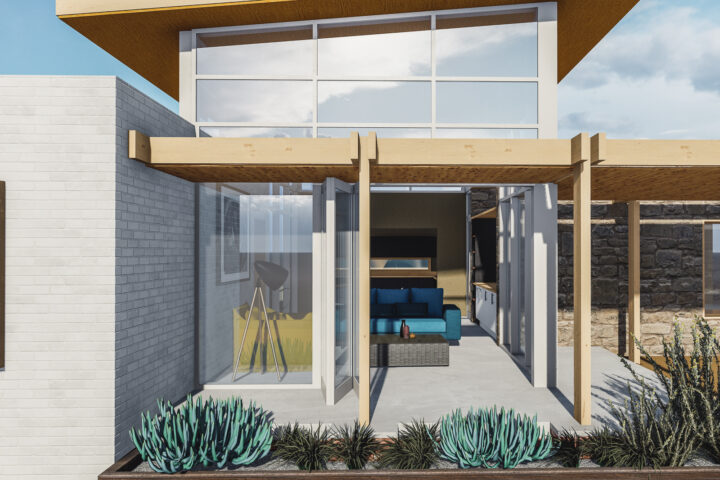
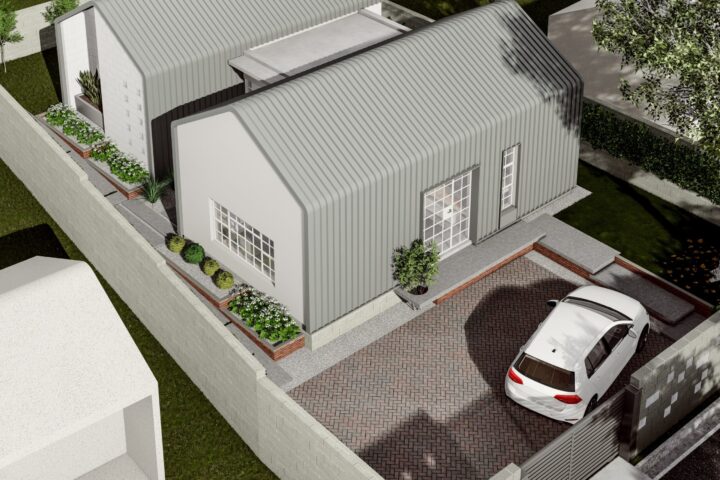
Set quietly against a gently rolling hillside, this single-story residence unfolds as a sequence of intimate pavilions, each bounded by warm, hand-laid stone walls that both shelter and reveal. Rather than a monolithic block, the home reads as an articulated compilation of well-organized spaces: a sheltered driveway framed by a low stone pier, a lush courtyard tucked between two wings, and a private garden pavilion set discreetly to one side. Here, every wall is both structure and landscape armature, guiding movement as surely as the paths of light that dance across their textured surfaces.
Above, slender monopitch roofs hover like paper planes caught in a summer breeze. Their deep overhangs and concealed gutters give the impression that they’re lightly levitating above the rooms below—a subtle flourish that lends the composition an almost ethereal lightness. From the interiors, clerestory windows sip southerly light; from the exterior, the slim rooflines draw the eye upward toward drifting clouds and distant limestone escarpments.
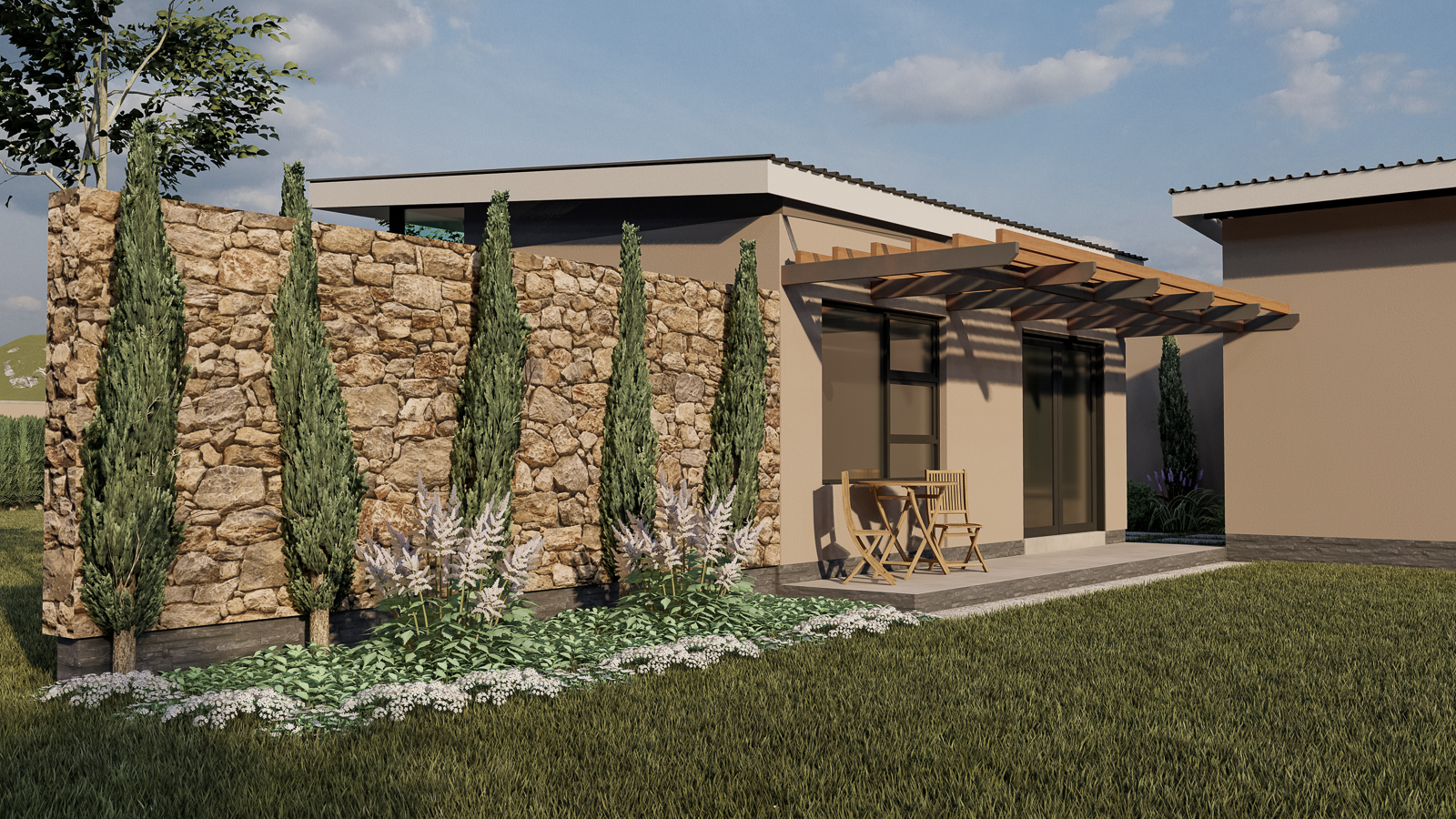
Connection to nature is woven into every joint and threshold. The living areas open onto stone-flagged terraces, where cushions of lavender and rosemary spill over low planters. Beyond the garden wall, olive and cypress silhouettes stand sentinel against the meadow, and the panorama of undulating hills becomes part of the living room décor. Even the modest driveway pavers, laid in a subtle herringbone, echo the rhythms of the surrounding fields.
Throughout, restraint is the guiding principle. Materials are chosen for their honest textures and muted tones—sand-coloured plaster, locally sourced stone, charcoal-grey metal. Details are pared back, letting natural light, landscape, and craft speak for themselves. The result is not a grand statement but rather a subdued sense of elegance: architecture that treads lightly on its terrain, inviting its inhabitants to discover, in every nook and cranny, the quiet poetry of place.